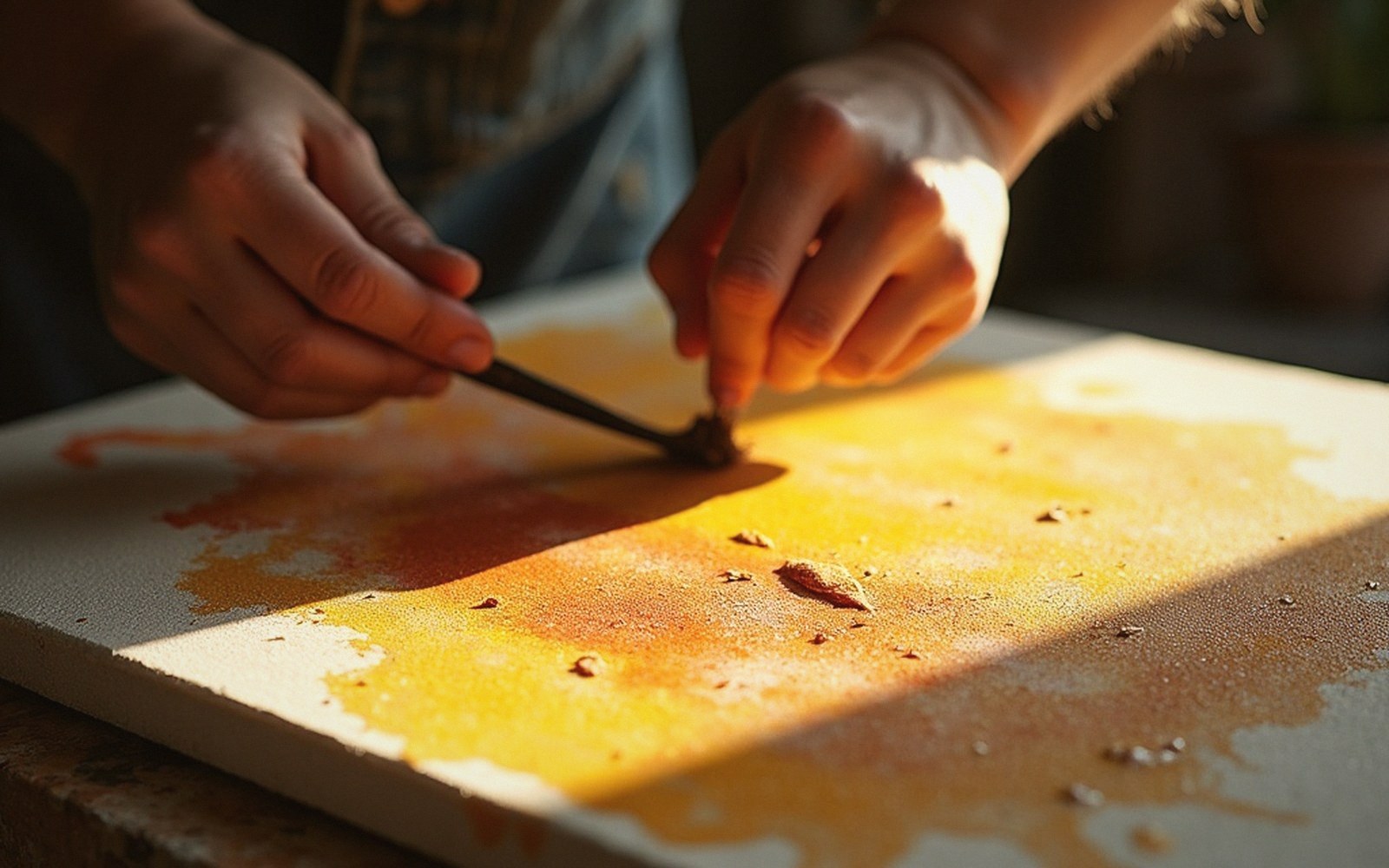
Raking light across a built-up paint surface. You are looking at the top of the stack — six more layers sit underneath it, and the seventh is around the edge.
Image: Gering & LopezA painting is a stack. This site is arranged like one.
Seven layers, from the wooden bars at the back to the moulding around the front. The navigation is the diagram: seven labels — STRETCHER, CANVAS, GROUND, PAINT, VARNISH, LIGHT, FRAME — name the physical layers of a painting in order from back to front. Traversing the nav traverses the object. Every section and every piece lives inside that stack.
SPECIMEN, EDGE ONBAND DEPTH = HOW MUCH THERE IS TO SAYDRAG THE BLADE OR HOVER TO PEEL
Seven layers, back to front. Hover a layer — or drag the blade — to peel the picture back to it.
The long read
One at a time. This one is about the act of looking itself.
More Than Eight Seconds
A practical piece on how to look at a painting for longer than instinct allows — where to start, what to follow, how long different kinds of attention take to develop. The site's flagship piece on the act of looking.
Read the pieceIndifference at eight seconds is not a verdict on the painting. It is mostly a verdict on eight seconds.
FROM “MORE THAN EIGHT SECONDS”

The bench
The suppliers, workshops and institutions that keep this work lit.
IN PARTNERSHIP WITH


WITH SUPPORT FROM











What each layer is
Seven short answers, then the pieces that go further.
The wooden skeleton underneath everything — why it moves, how it holds, and what happens when it fails.
The woven surface that takes the ground — thread count, tension, and the weave you can feel through the paint.
Gesso, chalk, lead white — the white layer everything sits on and why its recipe changes everything above it.
Pigment, binder, body — where colour comes from and why paint behaves the way it does under the brush.
The removable skin on top — what it changes optically, why it yellows, and when to leave it alone.
How a painting changes with the direction, colour and quantity of light — and how to use that when looking.
Moulding profiles, gilding, rebate depth — the frame as part of the picture rather than an afterthought.